10 August 2026
Wine Crate with Lid: What to Specify First
The lid is the decision that drives everything else in a wine crate with lid. Sliding, hinged, or lift-off changes the wall structure, the corner joints, the insert clearance, and the freight cost. Pick that first, then work through the dimensions, interior, and branding. Here is the order we use in our own quoting.
Lid type decides the crate
A sliding lid runs in grooves cut into the side walls. It's the cheapest lid to make and the fastest to open. But those grooves weaken the top edge. Drop the crate on a corner and that's where it splits. You see this on thin-walled crates that were never meant to ship with a bottle inside.
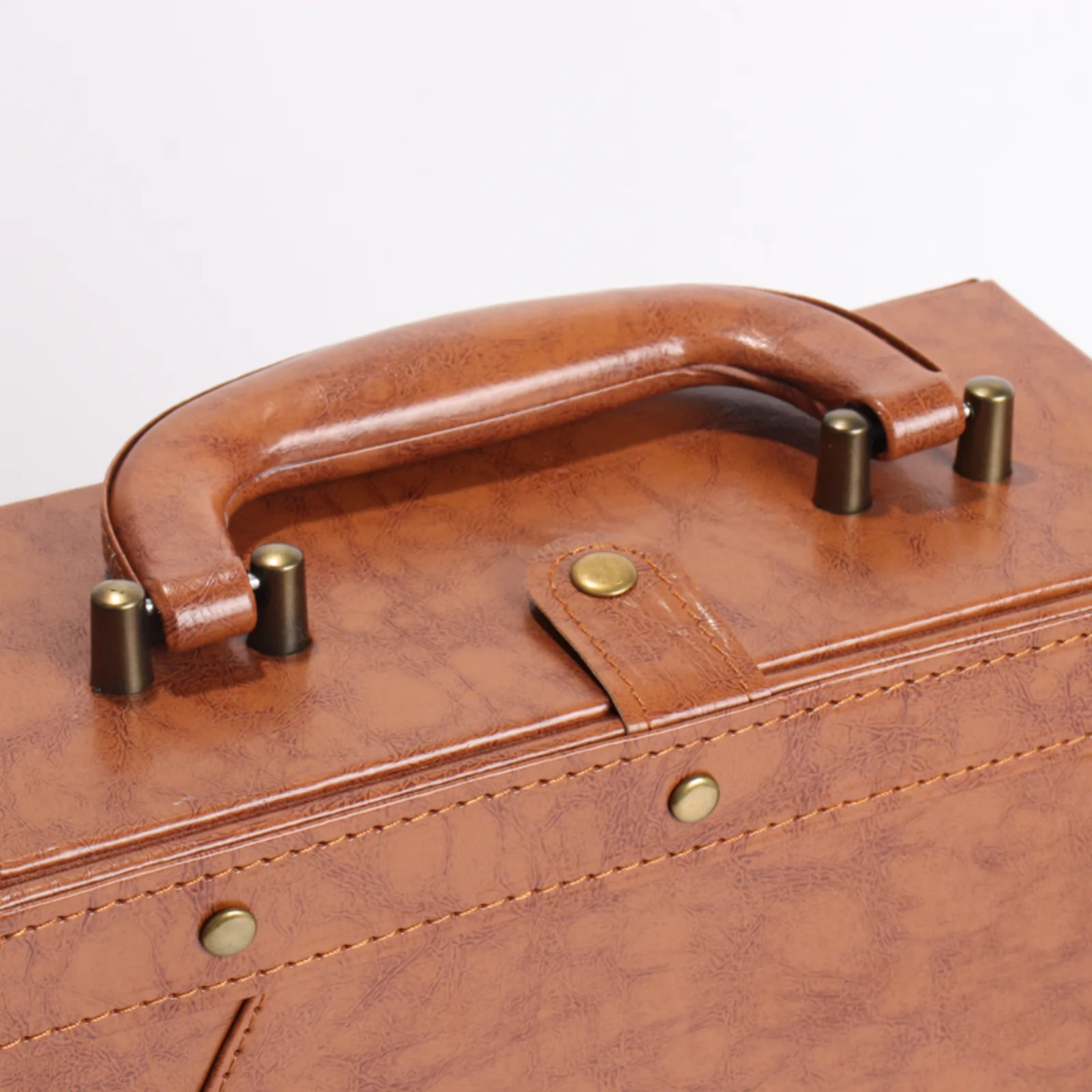
A hinged lid with a clasp feels more like a piece of furniture. The hardware adds cost. And the lid needs a stop so it doesn't flop back and tear out the screws. Shipping is easier because the lid stays attached. But the clasp can dent the crate next to it in a carton if you don't pack them face to face.
A lift-off lid is the strongest option for freight. No grooves, no hardware. Just a lid that sits over the top edge. It costs more in wood because the lid needs a lip or a rabbet to keep it from sliding sideways. For a collector piece that travels, that's usually the right call.
Internal size starts with the bottle
Measure the shoulder diameter and the height of the bottle, not the label. The shoulder is the widest point on most wine bottles. It sits about two thirds of the way up. If the insert grips the bottle at the shoulder and the base, the neck can stay unsupported. That's the four-point rule we use on every insert.
Add clearance for the insert material. A velvet tray needs about 3 mm of compression. EVA foam can be cut to a tight fit, but it still needs 1 mm so the bottle doesn't get stuck. Paper mould is the least forgiving. It's rigid, so the dimensions have to be right the first time.
Not sure? Send us the bottle sample. We measure it here and build the crate around the actual glass. That beats a drawing with one wrong dimension.
Wall thickness and corner joints
Wall thickness is a trade-off between weight and strength. A crate that holds a single 750 ml bottle can use 8 to 10 mm walls if the corners are joined well. Two bottles or a magnum need more. Or a different joint.
The corner joint matters more than the board. A butt joint with nails is cheap. But it fails when the crate is dropped on a corner. A finger joint or a dovetail takes longer to cut. The crate survives the 1.2 m six-face drop test we run with a bottle loaded. That's the difference between a gift that arrives intact and one that arrives as firewood.
Ask the factory how the corners are joined. If they can't tell you, that's a warning sign.
- Butt joint with nails: cheapest, weakest on corner drops.
- Finger joint: strong, visible on the outside, a design feature if you want it.
- Dovetail: strongest, costs more, usually reserved for display pieces.
- Spline or biscuit: hidden, good for clean faces, but needs precise cutting.
Interior finish and the insert
The insert is where the bottle sits. It changes the perceived value more than the wood. A velvet tray feels like a jewelry box. EVA foam feels like shipping protection. Paper mould looks eco-friendly but can read as cheap if the surface is rough. Die cut board is the budget option: it holds the bottle, but it doesn't add much.
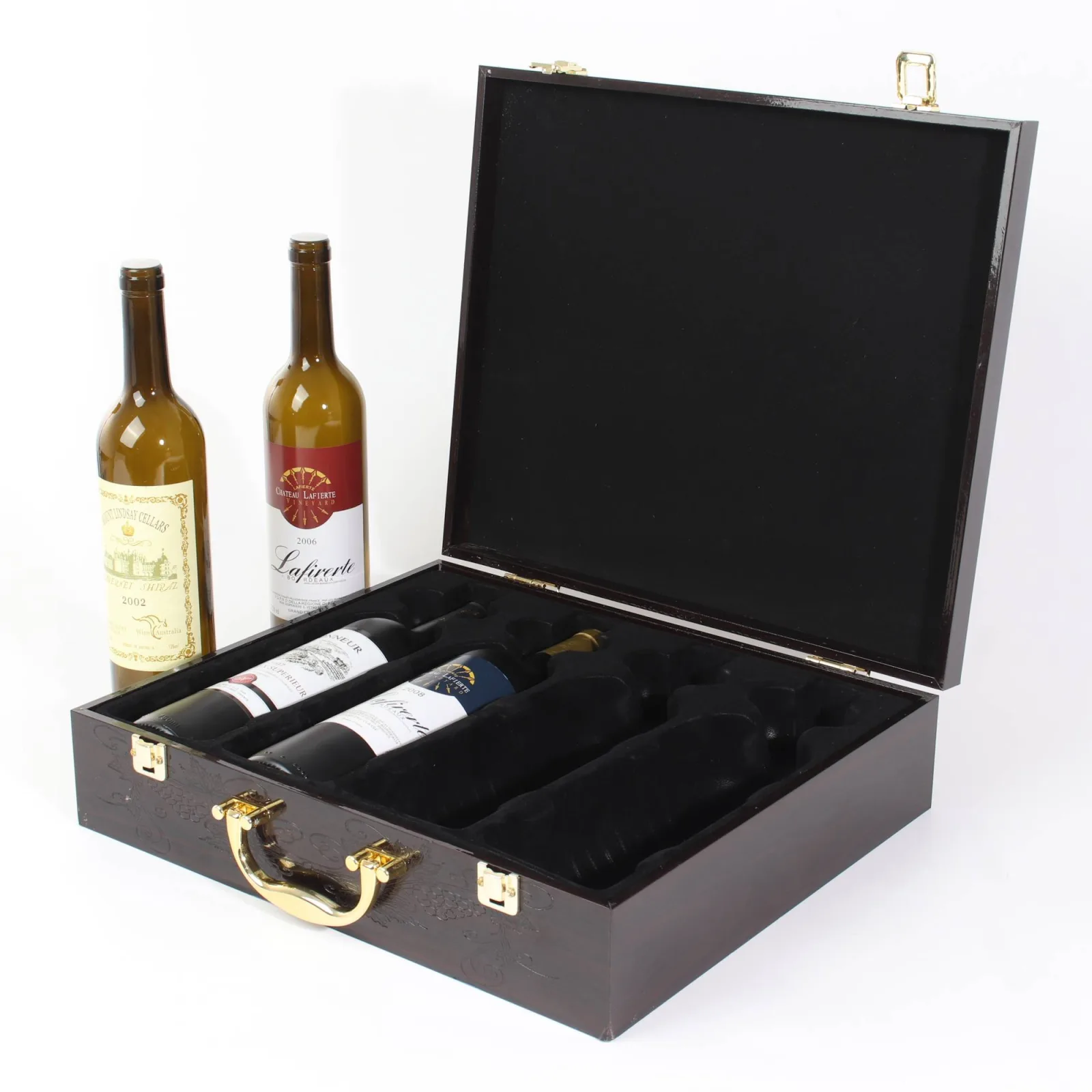
For a wooden wine crate, the insert has to do two jobs. It holds the bottle at four points so there's no unsupported neck or shoulder. And it stops the bottle from moving in transit. Our in-house check is simple: shake the closed crate for 10 seconds, tilt it 45 degrees, then turn it upside down. No movement, no slide, no release.
If the crate will be displayed open, choose the insert that matches the story you're telling. A collector piece with a velvet tray says luxury. A shipping crate with EVA foam says the bottle is safe. Both are honest, but they're not the same product.
Surface treatment and branding
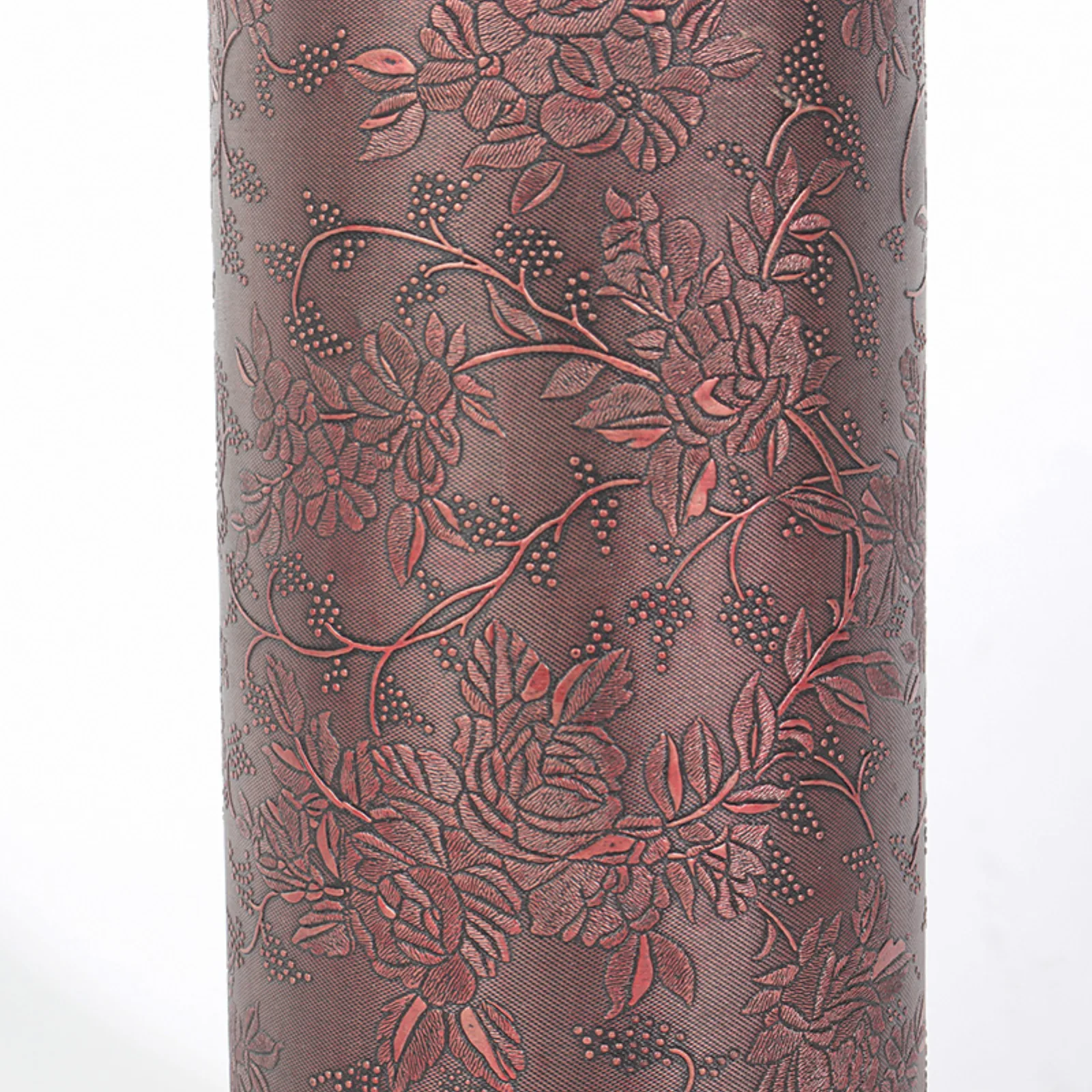
Engraving is the most durable option. It cuts into the wood, so it survives scuffs and humidity. Screen print is cheaper and works on flat panels. But it can wear off on the corners. Lacquer protects the wood and deepens the grain. It adds cost and a step in production.
Fine artwork on wood is a risk. The grain shows through light colors. Dark inks can bleed into the pores. If your logo has thin lines or small text, engraving or a printed plaque is safer than screen print. We've seen beautiful designs turn into a blur on open-grained wood.
For a wooden crate that will be handled, lacquer is worth the money. It seals the surface and makes the crate feel finished. For a crate that sits on a shelf, a natural oil finish might be enough.
Wood versus rigid board: when to switch
Wood costs more than rigid board. And it weighs more in freight. That's not a small difference. A wooden crate for a single bottle can weigh twice as much as a rigid box. Freight is charged by weight or volume. If you're shipping thousands of units to retail, that adds up fast.
Wood also moves with humidity. A crate made in a dry workshop can swell in a coastal warehouse. The lid might not slide. Rigid board is more stable. We use greyboard at 1200 g minimum, 1400 g for spirits, with a facing paper of 157 g. That holds its shape better than thin wood in changing conditions.
So when does wood earn its place? Collector gifting, display pieces, and retail presentations where the crate is part of the product. For volume retail, a rigid board wine box is often the smarter buy. We say that even though we sell both.
If you want the look of wood without the weight or the humidity problem, a faux wood wine box is a middle option. It prints a wood grain on rigid board, so it costs less and ships lighter. It won't fool anyone up close, but on a shelf it reads as wood.
For the real thing, see our solid wood wine boxes. And if you want to go through the whole custom process, start at custom wooden wine box manufacturing.
What to send us for a quote
The fastest way to a quote is to send the bottle dimensions or the bottle sample, the reference design, the quantity, and any special requirements. That lets us check the insert clearance and the wall thickness against the actual bottle, not a guess.
If you want a sample first, we offer two types. A blank sample shows the structure and the lid fit. A printed sample shows the artwork and the finish. You can approve the blank sample before we cut the printing plates. That saves time and money if the lid needs adjustment.
For a wooden wine crate with lid, the measurements we need are the internal width, depth, and height, plus the bottle shoulder diameter and height. If you have a target weight or a freight budget, tell us that too. It changes the wall thickness and the joint choice.
Key points
- Choose the lid type first: sliding, hinged, or lift-off.
- Measure the bottle shoulder diameter and height, not the label.
- The insert must hold the bottle at four points with no movement.
- Wood costs more and moves with humidity; rigid board is more stable.
- Send bottle dimensions, reference design, quantity, and special requirements.
Questions buyers ask
Which lid type is best for shipping wine crates?
A lift-off lid is the strongest for freight because it has no grooves or hardware to fail. Hinged lids can work if the clasp is protected, and sliding lids are fine for local delivery but risk splitting at the grooves if dropped.
How do I know the insert will hold the bottle?
We check every insert by shaking the closed crate for 10 seconds, tilting it 45 degrees, and turning it upside down. The bottle must not move, slide, or release. The insert holds the bottle at four points: two at the shoulder, two at the base.
Can I use a wooden crate for retail volume?
It depends on your budget and freight. Wood costs more and weighs more than rigid board, so it adds to shipping. For volume retail, a rigid board box with a wood-grain print is often cheaper and more stable. Wood is better for collector gifting and display.
Send your bottle dimensions or sample and the lid type you want, and we will quote the crate that fits. Get a Quote
Put this on your bottle
Send the bottle sample or dimensions, quantity and a reference design. We reply with structure options and pricing.
- Email[email protected]