23 September 2026
Buy Wooden Wine Crates: What to Check First
Before you buy wooden wine crates, settle four things: the material, the bottle count, the lid or open format, and the insert. Those four choices decide how the crate is built, how the bottle is held, and how the crate survives shipping. Get them wrong and you'll pay for it in returns, breakage, and a crate that looks nothing like the sample.
Material: solid wood, faux wood, or rigid board
Start with material because it sets the budget and the failure modes. A solid wood wine crate is the top of our range. It takes a knock, it ages, and it feels like furniture. But solid wood is the wrong answer for heavy stacking, tight artwork panels, and buyers who only need a printed surface. It moves with moisture, it's heavier to ship, and it won't hold a fine print detail the way a faced board will.
Our faux wood box gives you the wood look on a different substrate. It's lighter, it takes print and specialty paper cleanly, and it costs less to move. If your crate is really a display or gift outer that sits on a shelf and never sees a forklift, rigid board with specialty paper is the honest alternative. Say that out loud before you fall in love with a wood grain photo.
Greyboard is the backbone of those rigid builds. We use 1200 g minimum, and 1400 g recommended for spirits. Facing paper is 157 g minimum specialty or coated. No recycled greyboard, no high-moisture paper. That last point matters more than people think: high-moisture board warps after printing, and you find out when the lid stops seating.
Format: single bottle vs multi bottle
Single bottle or multi bottle? A single bottle crate is a presentation piece. It's carried by hand, it sits on a counter, and the insert does most of the work. A multi bottle crate is a logistics unit. It gets stacked, strapped, and slid across a van floor. The build changes with the count, not just the size.
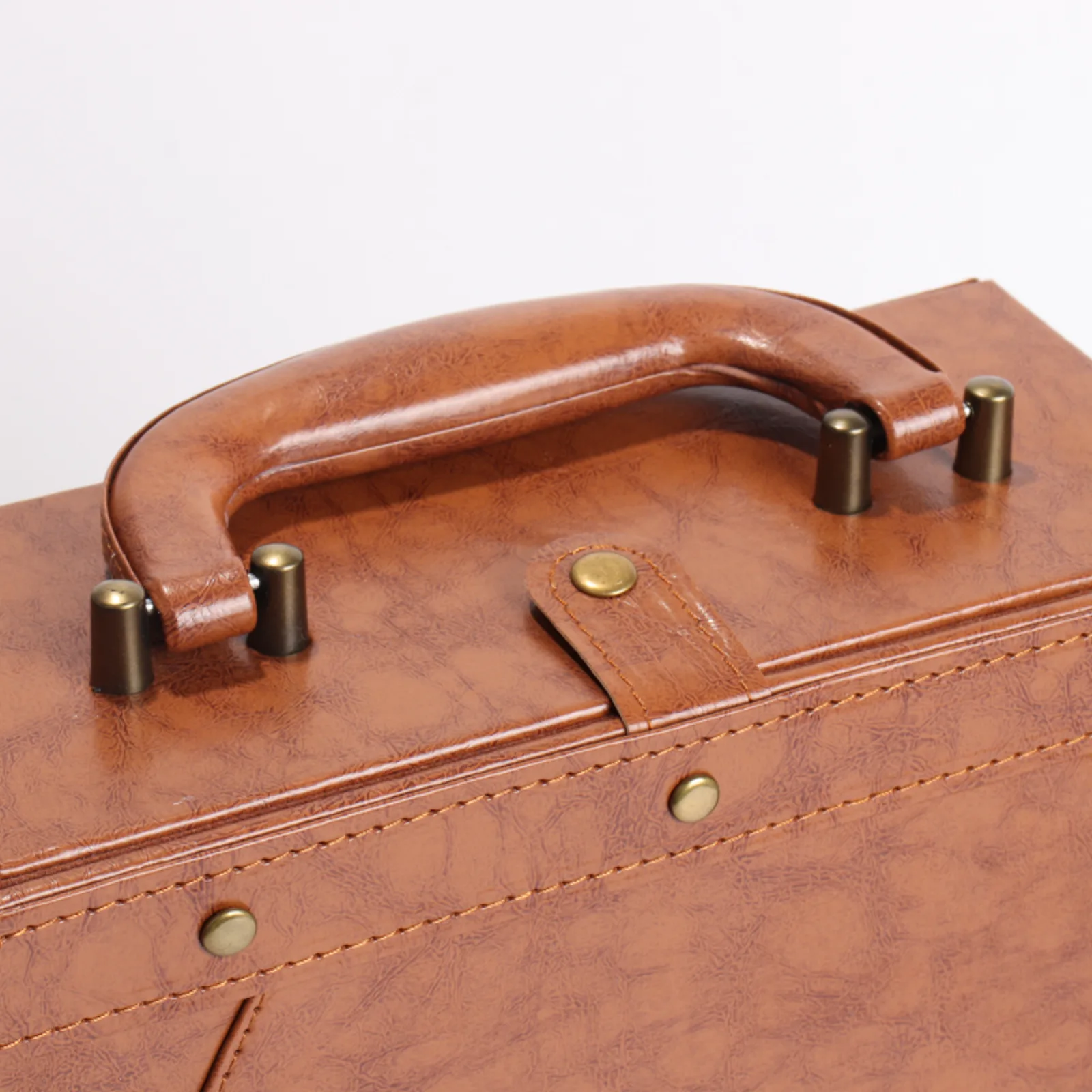
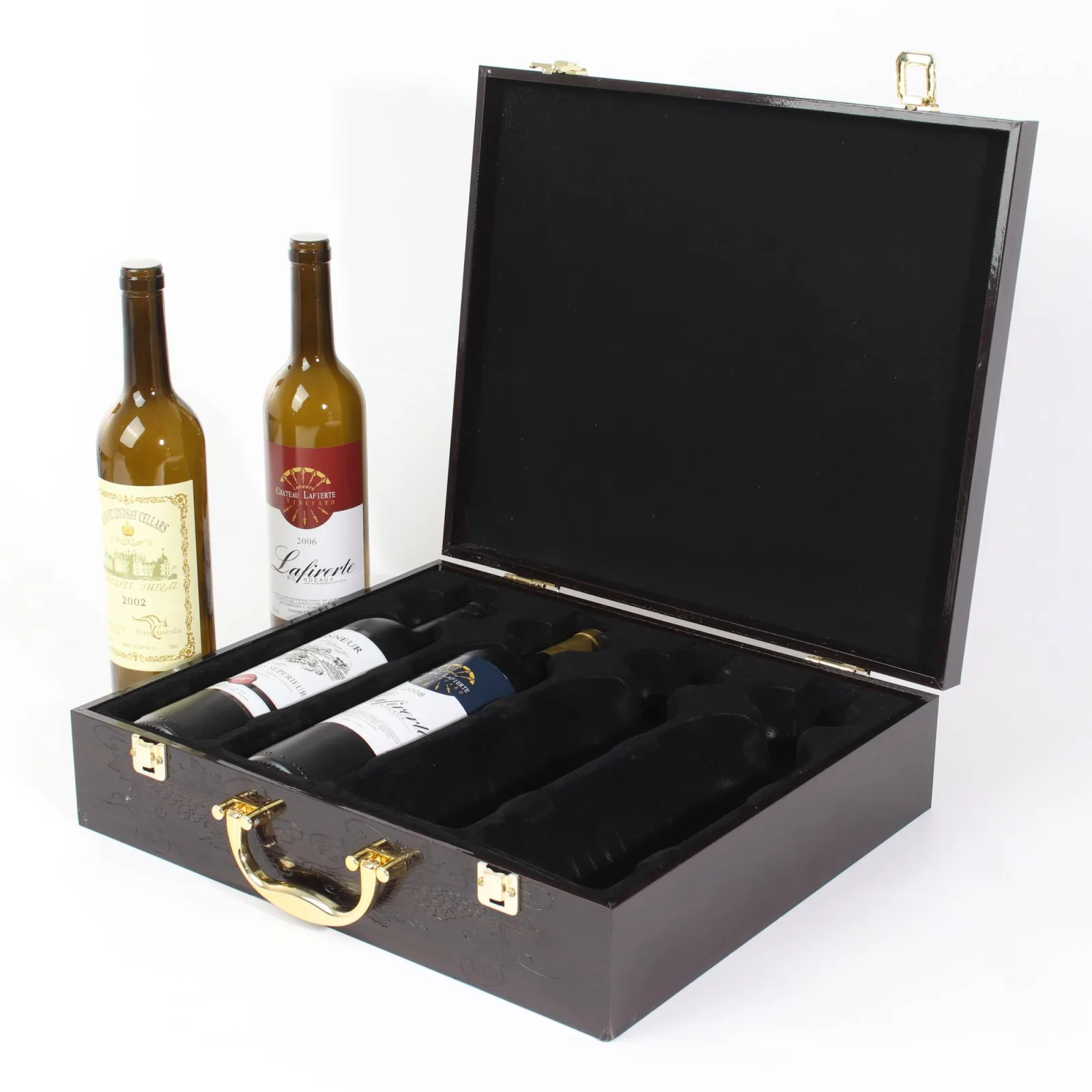
An open crate and a wooden wine crate with lid are different builds. A lid adds a seating fit and hardware. That means a rebate or a lip, a hinge or a clasp, and a gap you have to control or the lid rattles in transit. If you don't need the lid, don't pay for the fit. If you do need it, expect the tooling and the assembly to reflect that.
Insert rule: four points, no unsupported neck
The bottle must be held at four points, with no unsupported neck or shoulder. That's the rule. An unsupported neck is where breakage starts: the bottle pivots on the base, the neck takes the load, and a drop finishes the job. We check with a 10 second shake, a 45 degree tilt, and an inversion. If it moves, slides, or releases, the insert goes back.
We use velvet tray, EVA foam, blister, or paper mould. Velvet tray is the gift look. EVA foam is the workhorse. Blister is for tight, repeatable holds. Paper mould is the lighter, more recyclable option. None of them are right for every bottle. A heavy 750 ml spirits bottle and a slim wine bottle need different cavity shapes, and the shoulder profile decides where the foam touches.
- Shake 10 seconds: no movement.
- Tilt 45 degrees: no slide.
- Invert: no release.
- Four contact points minimum, neck and shoulder supported.
Structure and fit: what we control
Our control tolerance is plus or minus 1 mm on the insert and plus or minus 2 mm on the box body. That's not a marketing number; it's what we hold on the line. For foldable boxes, creases must not crack, magnet position is plus or minus 1 mm, and corners are 90 degrees when erected. If a corner is off, the lid won't sit flat and the crate looks cheap on a shelf.
Colour is the other quiet failure. We do Pantone matching, first-article approval, and mid-run sampling. Black, deep blue, and burgundy are the hardest to hold. They show every shift. If your brand colour is one of those, plan for a first article and a mid-run check, not just a digital proof.
In-house checks before shipment
Our in-house checks include a 1.2 m six-face drop test with the bottle loaded, stacking top load of 40 kg or more for 24 hours, and truck and sea vibration simulation with no internal movement. Those are the checks that catch a bad insert before it reaches your customer. They're not a substitute for your own testing, but they're the floor we work from.
If you want to see how we run these, the quality page lays out the steps. The point is simple: a crate that passes a shake test on a bench can still fail a drop test on a corner. We load the bottle for the drop because that's how it ships.
What to send us
To start, send box dimensions or a bottle sample, a reference design, quantity, and any special requirements. Use the quote form or email. If you have a bottle, send it. A sample tells us more than a drawing, especially for the shoulder and the base. If you don't have a bottle, send the dimensions and we'll work from those.
For custom work, the custom wooden wine box manufacturing page walks through design support, structure development, material selection, printing, and finishing. We've been doing this since 2014, with customers in over 30 countries. That doesn't make us right for every job, but it means we've seen the failure modes and we'll tell you when solid wood is the wrong answer.
Key points
- Settle material, bottle count, lid or open format, and insert before you brief anyone.
- Solid wood is wrong for heavy stacking, tight artwork, and print-only surfaces.
- Four-point bottle hold, no unsupported neck. Shake, tilt, invert.
- Control tolerance: insert plus or minus 1 mm, box body plus or minus 2 mm.
- Send dimensions or a bottle sample, reference design, quantity, and special requirements.
Questions buyers ask
What's the difference between a solid wood wine crate and a faux wood box?
A solid wood wine crate is real timber: it takes a knock, ages, and feels like furniture. A faux wood box gives the wood look on a different substrate, usually rigid board with a wood-grain facing. Faux is lighter, prints cleaner, and costs less to ship. Solid wood is the wrong answer if you need tight artwork panels or heavy stacking.
How is the bottle held inside a wooden wine crate?
The bottle is held at four points, with no unsupported neck or shoulder. We use velvet tray, EVA foam, blister, or paper mould, depending on the bottle and the look. We check with a 10 second shake, a 45 degree tilt, and an inversion. If it moves, slides, or releases, the insert goes back.
What do I need to send to get a quote for custom wine crates?
Send box dimensions or a bottle sample, a reference design, quantity, and any special requirements. Use the quote form or email. A bottle sample tells us more than a drawing, especially for the shoulder and base. If you don't have a bottle, send the dimensions and we'll work from those.
Send your box dimensions or a bottle sample, reference design, quantity, and special requirements through the quote form or email. Get a Quote
Put this on your bottle
Send the bottle sample or dimensions, quantity and a reference design. We reply with structure options and pricing.
- Email[email protected]