24 August 2026
The Vintage Wine Crate Look with Modern Board
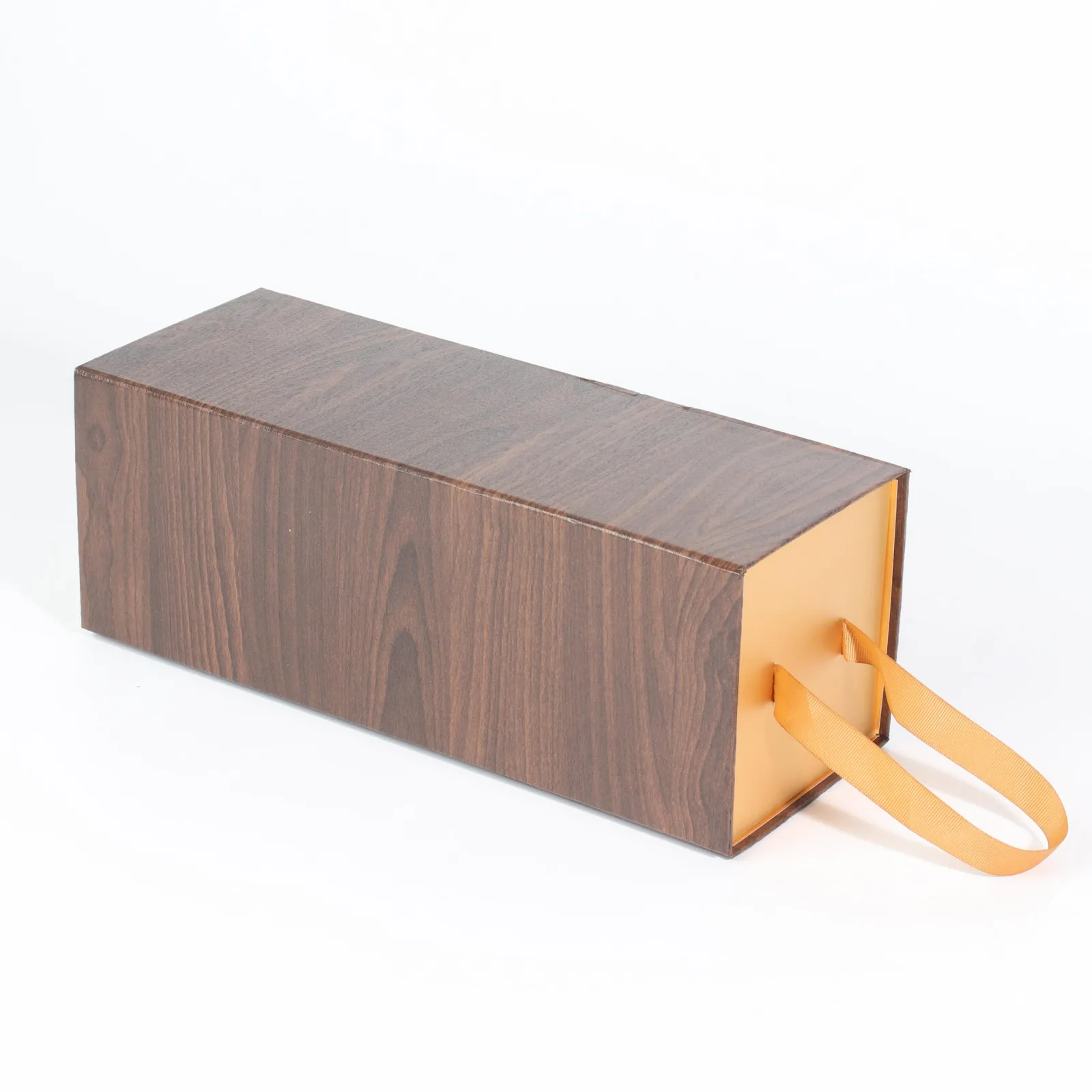
A real vintage wine crate is heavy, expensive to ship, and moves with humidity. A board box with a wood-grain surface gives you most of the visual effect at a fraction of the weight. You still get the crate look. You just don't pay for it in freight and storage.
Why solid wood fails first
It fails on freight. A solid pine crate for three 750 ml bottles can weigh several kilos before packing. That weight repeats on every pallet, every container, every courier van that gets loaded three times before it reaches the customer. Board boxes cut that weight hard. They still look like wood, but they don't cost like wood. Freight is where the savings show up first. A lighter box means more units per pallet and less fuel per unit. Over a full production run, that difference compounds.
Humidity is the second failure. Wood swells and shrinks. In a damp cellar or a hot container, a tight lid can jam or a joint can open. Board doesn't move the same way. It sits stable on a shelf and in transit. We have seen solid wood crates come back with lids that won't close after one summer in a warehouse. That doesn't happen with greyboard. The board stays flat and the lid keeps its fit.
Then there's the price. Solid wood means more material, more labour, more finishing. A faux wood box uses printed paper over greyboard. Same shelf impact, lower unit cost. You also avoid the lead time that goes with cutting, sanding and sealing real wood. If your buyer is price-sensitive, board is the answer.
How the vintage look is built
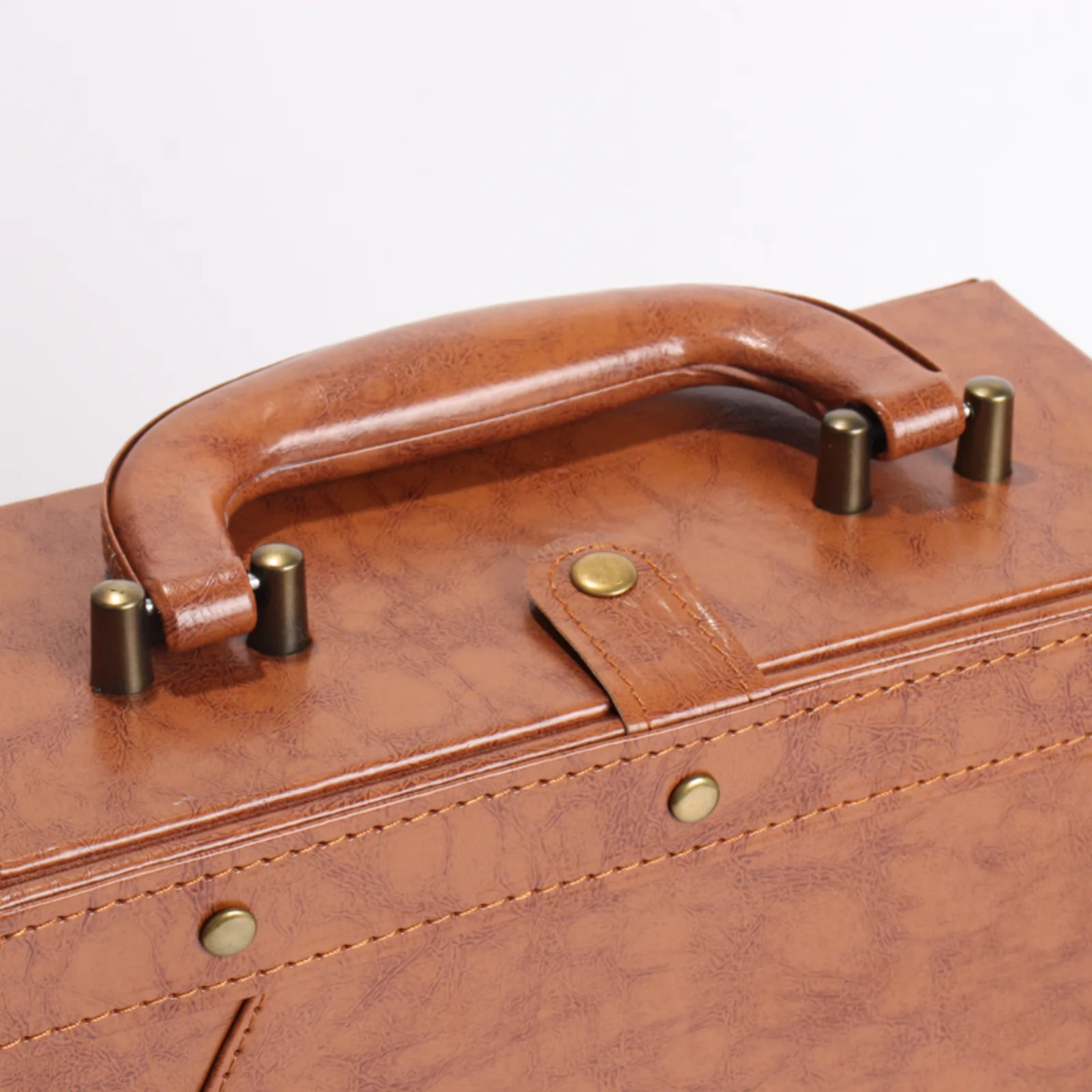
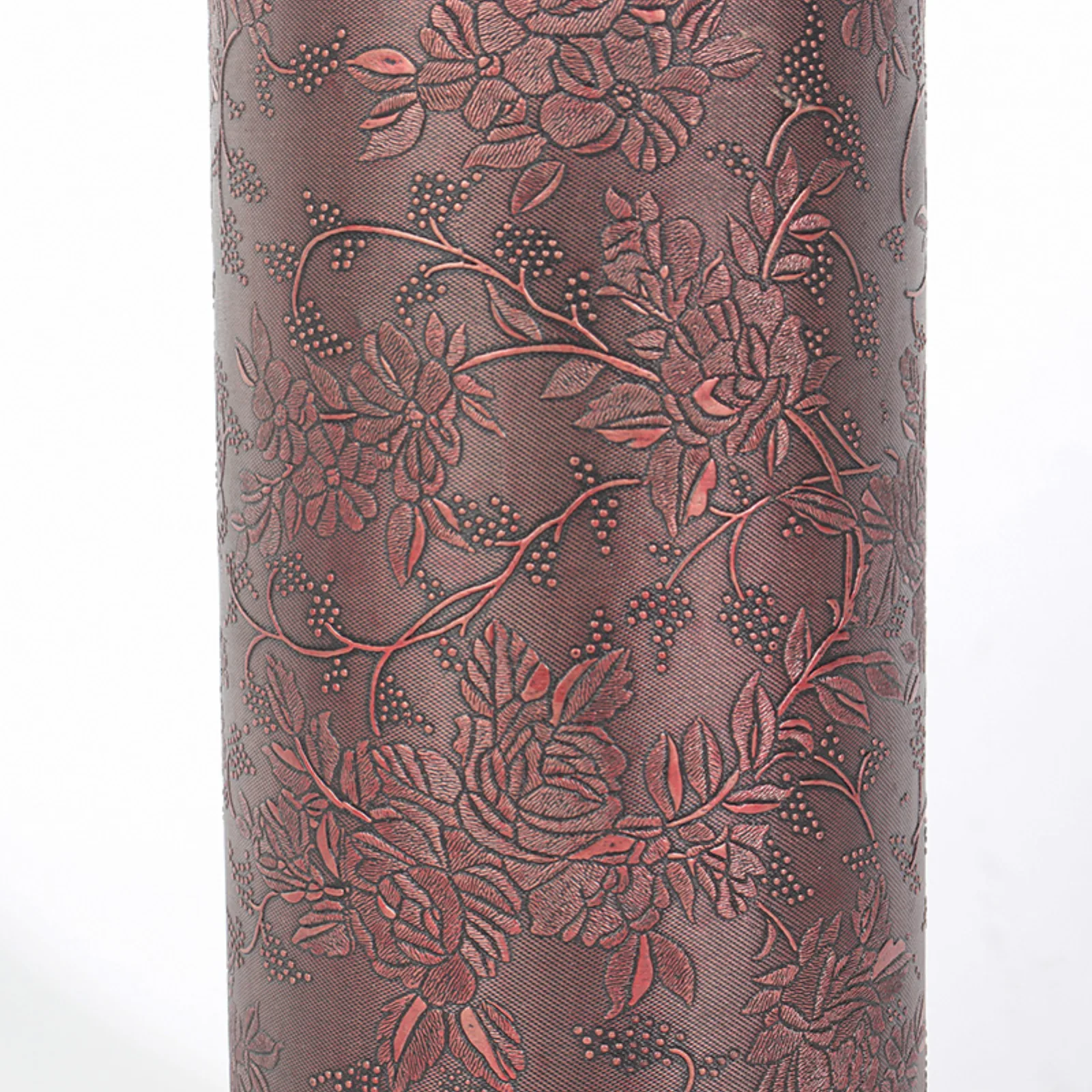
The surface does most of the work. We use leather-textured and wood-grain specialty papers over greyboard. Print alone can look flat, like a photograph of wood. Emboss changes that. When the grain is pressed into the paper, light catches it the way it catches real grain. Your finger reads it as texture, not as a picture. That tactile cue is what sells the crate look from two feet away.
Kraft paper helps too. Its natural brown tone and visible fibres read as old wood at a glance. A matt finish sells the effect better than gloss. Gloss reflects light and looks new. Matt absorbs it and looks aged. Think of an old crate you would find in a cellar. It doesn't shine. It has a dull, worn surface. Matt finish gives you that.
For the full breakdown of papers and board, see Materials and structures. We can also combine a wood-grain paper with a leather-textured border for a more premium feel. The key is to keep the grain consistent across the lid and base. A mismatched grain breaks the illusion.
- Wood-grain specialty paper with emboss makes grain read as texture.
- Kraft paper gives a natural, aged brown tone.
- Matt finish beats gloss for the vintage look.
- Consistent grain direction across lid and base keeps the illusion.
Structures that read as crate-like
Not every box shape works. A shallow lid-and-base looks like a gift box. A deep lid-and-base, where the lid covers most of the height, reads more like a crate. Double-door boxes do too, especially with rope or leather handles. The handles matter. They change the box from something you open on a table to something you carry like a crate. A rope handle with a rough texture reinforces the vintage feel.
Stencil-style printing adds the final cue. Think single-colour lettering, slightly rough edges, maybe a vintage year. It's a small detail that shifts the whole impression. We can also add edge treatment, like a darker stain effect on the corners, to mimic wear. That one detail often makes the difference between a box that looks printed and one that looks found.
You'll find these structures in our Faux Wood Wine Boxes range. If you need a custom size, we can adjust the lid depth and handle placement to match your bottle.
Where faux wood fails
Be honest about this. If you're packing six bottles or more, the weight adds up. Solid wood handles that load better. Our Solid Wood Wine Boxes are the right answer for heavy multi-bottle crates. Board can still work for six bottles if you use a thicker greyboard, but at some point the weight of the bottles pushes the limits of the material.
Engraving is another line. You can engrave real wood and it looks right. Engraving on printed paper doesn't. It tears the surface and shows the greyboard underneath. If your customer wants a name or logo engraved into the box itself, board is the wrong choice. Foil stamping can give a similar visual effect without tearing, but it doesn't have the same depth as engraving.
And some buyers will pick the box up and knock on it. They want the sound of wood. Board doesn't give them that. If your customer is that buyer, don't sell them faux wood. Sell them the real thing. We have seen buyers reject a board box after one knock. That's a hard requirement, and no amount of print quality will change it.
The board underneath
The board matters more than the paper. We use greyboard at 1200 g minimum. For spirits, where bottles are heavier, we recommend 1400 g. The facing paper is 157 g minimum, specialty or coated. No recycled greyboard, no high-moisture paper. That's the standard. It keeps the box from sagging or tearing at the corners. A thinner board will fail at the hinge or the corners first. We have seen boxes collapse under their own weight when the board was too light.
For more on our box constructions, see Rigid Board Wine Boxes. The greyboard gives the box its rigidity, and the facing paper gives it the look. If either one is too thin, the box fails.
Compare samples side by side
Before you commit, get a wood sample and a faux wood sample. Put them next to each other. Look at the grain from two feet away. Feel it. Pick both up. Then decide what your buyer actually needs. A side-by-side comparison makes the trade-offs clear. You'll see the weight difference immediately. You'll also see where the faux wood falls short on texture and sound.
If the buyer wants the look, the weight saving and the price, faux wood wins. If they want the weight, the sound and the ability to engrave, solid wood wins. Don't guess. Test. We can send both samples so you can make an informed decision. Most buyers know within a minute of holding both which one is right.
We make both. And we'll tell you when one is the wrong choice. Start with a sample from Custom Wooden Wine Box Manufacturing. Tell us the bottle size and the look you want, and we'll prepare the samples.
A note on vintage wine crate
The term vintage wine crate gets used loosely. Sometimes it means an actual old crate. Sometimes it means a new box that looks old. Know which one your buyer wants. If they want the real thing, we can build it in solid wood. If they want the look, we can build it in board. Either way, don't let the word vintage fool you into paying for age you don't need. The vintage look is a surface treatment, not a material property. You can get it on board for a fraction of the cost.
If your buyer is a collector who wants authenticity, solid wood is the only answer. But if your buyer is a retailer who wants shelf appeal, board gets you there faster and cheaper. We have built both for customers in over 30 countries, and the split usually comes down to price and handling.
Key points
- Faux wood board boxes cut weight and freight cost.
- Embossed wood-grain paper reads as texture, not a photo.
- Matt finish and stencil print sell the aged look.
- Solid wood is better for heavy crates and engraving.
- Always compare wood and faux wood samples side by side.
Questions buyers ask
What is a vintage wine crate?
A vintage wine crate can be an actual old wooden crate or a new box made to look like one. Buyers often want the aged look without the weight and cost of solid wood. A board box with wood-grain paper gives that look at a lower price.
Can a faux wood wine box be engraved?
Engraving on faux wood is not recommended. The printed paper surface tears and shows the greyboard underneath. If you need engraving on the wood itself, choose a solid wood box instead.
How do I get the vintage wine crate look without solid wood?
Use a board box with wood-grain or leather-textured paper, embossed for texture, with a matt finish. Add stencil-style printing and rope or leather handles. Structures like deep lid-and-base or double-door read as crate-like.
Send your box dimensions or bottle sample and we'll quote both solid wood and faux wood options. Get a Quote
Put this on your bottle
Send the bottle sample or dimensions, quantity and a reference design. We reply with structure options and pricing.
- Email[email protected]